TRIBUTES

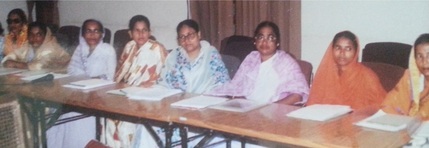
Southern Board Members (2004)

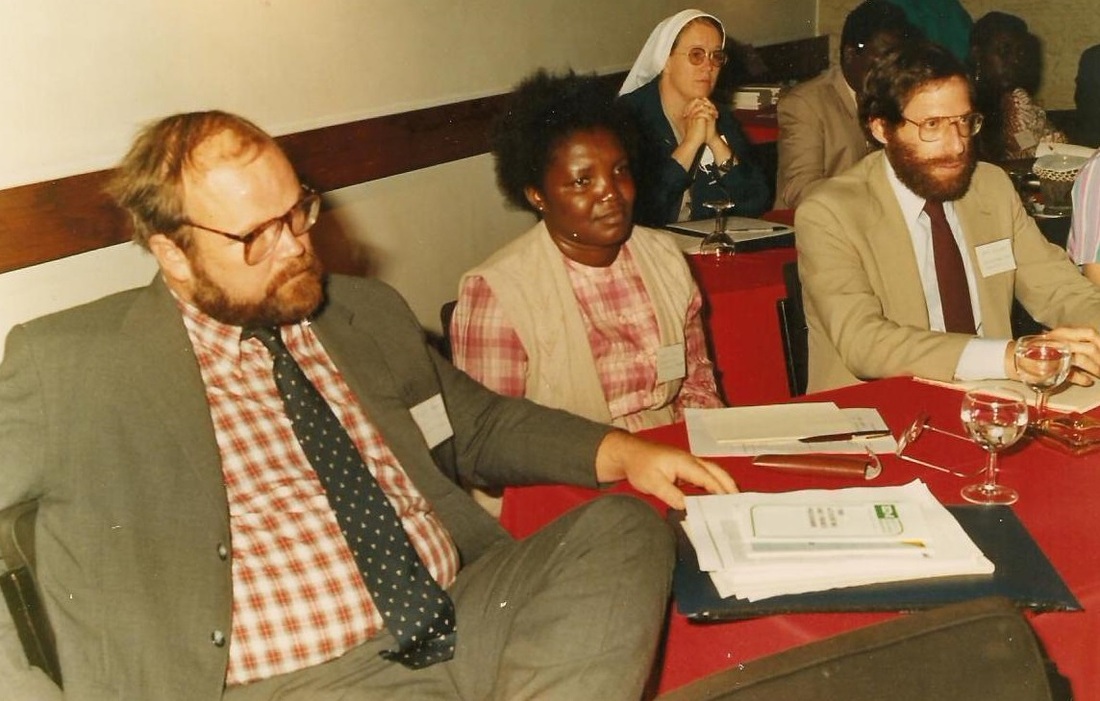
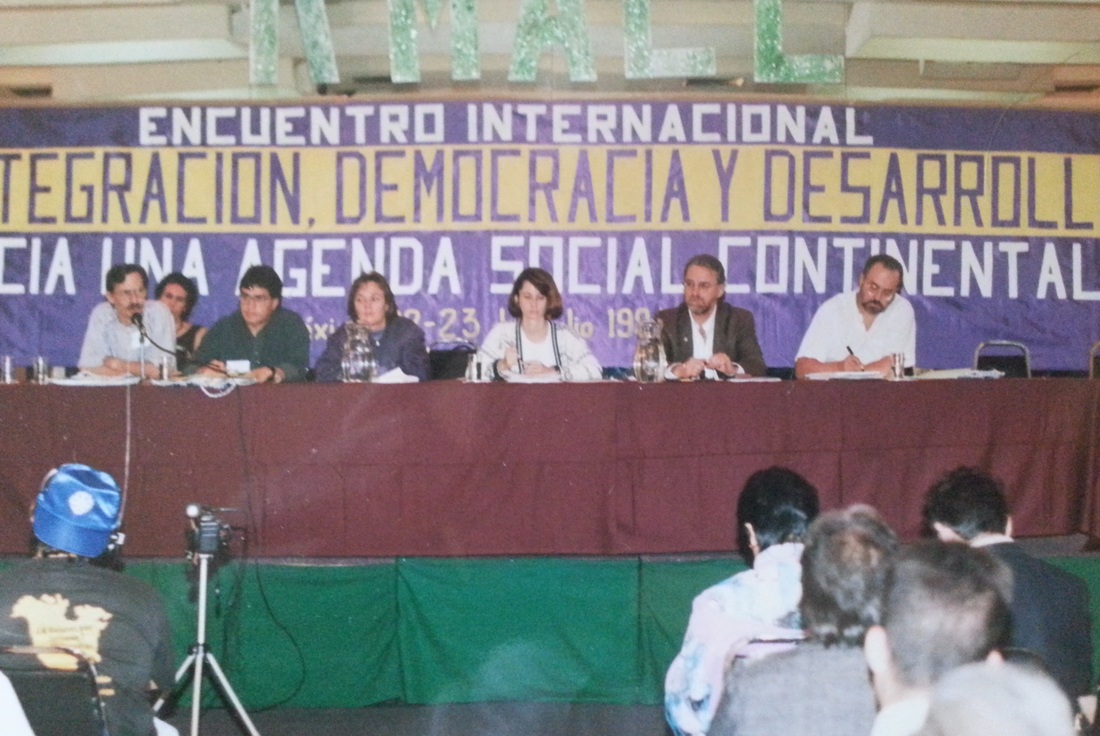
Global (1994)


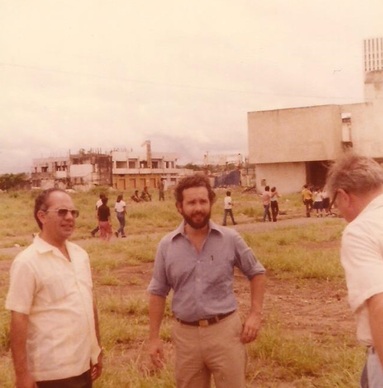
The Development Group for Alternative Policies was founded in 1976 to assist in the promotion of economic justice across the South, or Third World, by helping to maximize control by poor communities and sectors over their own development in the face of impositions from the North. It was established on the principle of the right to self-determination and on the belief that local knowledge is indispensable to the shaping of sound development policies, programs and projects relevant to local needs and conditions. (more...)

Announcements and Analysis
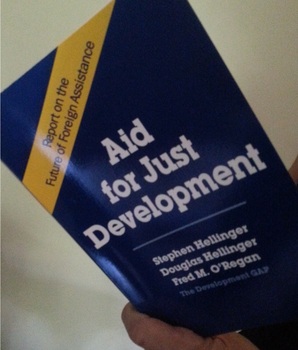
Welcome to the website of The Development GAP. Here you will find a considerable amount of information about the organization and its history and a large number of Development GAP documents that trace key issues and events in our field over the past three decades. Among these is the full text of our award-winning book, Aid for Just Development. Please check with us in the months ahead as we share information about our efforts and analysis of events and policy developments related to the global economy and the struggle for economic justice.

     _______________________________________________________________________     

THE DEVELOPMENT GAP CONTRIBUTES FIELD-BASED PROPOSAL TO CONGRESSIONAL EFFORT TO REFORM FOREIGN AID

After collaborating with the Congressional Progressive Caucus and sharing a proposal for a fundamental reform of development assistance with the House Foreign Affairs Committee, The Development GAP provided testimony on the subject in July to the Senate Foreign Relations Committee. Based on its three decades of work on foreign aid, both on the ground overseas and with policymakers in Washington, the organization’s president addressed how the U.S. aid program would have to be structured and operate in the field in order to be successful. He emphasized that, rather than the level of funding, the key factors in the effective support for the building of strong, equitable and sustainable national economies are investments in appropriate institutions, the participation and knowledge of affected populations, and a structured separation of development assistance from non-development objectives and interests.    

Full report >>>

__________________________________________________________________     

European Conference Addresses Financial Crisis and the IFIs

Read the Voksenaasen Statement on a Necessary Response to the Global Financial and Economic Crisis >>>

__________________________________________________________________     

THE HARMONIZATION OF WILDLIFE HABITAT AND HUMAN LIVELIHOOD IMPERATIVES: ADDRESSING COMMON ROOT CAUSES THROUGH A PARTICIPATORY, COLLABORATIVE AND SUSTAINABLE APPROACH

Preliminary Findings

Prepared by Steve Hellinger and Doug Hellinger
The Development GAP

2008

The commercial exploitation of the natural resource base has often put those attempting to preserve their local livelihoods and those seeking to protect animal habitat in conflict over the control and use of local resources.  The search for an integrated approach, for a conservation/development nexus, that can bridge the gap that frequently exists between conservationists and poor communities will depend on finding common ground in addressing the underlying causes of their problems.  Toward that end, it is essential to view humans as an integral part of the ecosystem, and it is equally important to proceed with an understanding of the political economy that has shaped local circumstances that have left the poor with diminished options.  When poor communities are viewed in these contexts, the importance of their active participation in finding sustainable solutions to habitat degradation, as well as to their own income needs, becomes apparent, as do the advantages of conservationists engaging them in effective and balanced partnerships.    

Full report >>>

__________________________________________________________________     

Development GAP Founders Honored for Launching Foundation

Doug Hellinger, Fred O’Regan and Steve Hellinger at the ADF

On 6 May 2008, Development GAP co-founders Fred O’Regan, Steve Hellinger and Doug Hellinger were honored by the African Development Foundation for their efforts resulting in the establishment of the Foundation by the U. S. Congress.  “Founders’ Day”, held with Foundation supporters and past and present staff on hand at the ADF’s offices in downtown Washington, DC, celebrated both 25 years of the Foundation’s operations and The Development GAP’s eight-year endeavor to create a new vehicle and approach for the U.S. government’s delivery of foreign aid to Africa.

The ADF’s leadership cited Fred (currently the Development GAP’s Chair), Steve (President) and Doug (Executive Director) for “their crafting of the Foundation’s legislative mandate [that] reflected their vision and belief in the capacity of Africans to shape their own development” and for “their commitment, sustained work and diligent follow up actions [that] ensured that the ADF was established according to the letter and spirit” of the African Development Foundation Act.

Read more >>>

     _______________________________________________________________________     

SAPRI Report Exposé Is Compulsary Reading, Says Review

The following review appeared in the Journal of the Inter-American Foundation,
Grassroots Development, Volume 28, Number 1, 2007.

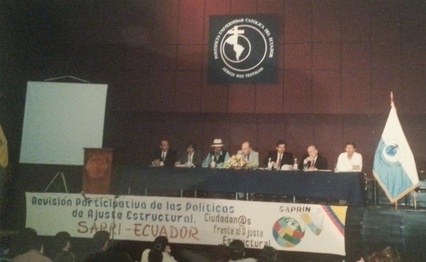
Structural adjustment—the term has been a panacea for some and a curse for others. Political leaders and development experts have praised it and condemned it, but few have actually measured its impact on all sectors of a country’s economy. The Structural Adjustment Participatory Review International Network (SAPRIN), a coalition of civil society organizations from nine countries on four continents, set out to do just that. The total effort was coordinated by The Development GAP of Washington, D.C., under the leadership of Steve and Doug Hellinger.

The initiative began with the World Bank’s endorsement and participation. “What I am looking for—and inviting your help in—is a different way of doing business in the future,” bank president James Wolfensohn wrote to SAPRIN in 1996 when the group was still incipient. But the cooperative spirit would not hold for the duration of the study. The Bank officially withdrew before it was completed and would not comment on SAPRIN’s final report.

For anyone in the development profession, this book is compulsory reading (more...)

     _______________________________________________________________________     

Past announcements and analysis:
A President Comes to Visit and the Chickens Home to Roost in South America (March 8, 2007)

Now available ...

Structural Adjustment: The SAPRI Report
The Policy Roots of Economic Crisis, Poverty and Inequality
320 pages
Language: English
$29.95 paperback, $85.00 hardcover
To order from the publisher
click here

Ajuste Estructural: Informe SAPRI
Una investigación participativa realizada por la Sociedad Civil y el Banco Mundial

288 pp.
Lengua: castellano
Precio: $29.95
Para ordenar de The Development GAP
haga clic aquí

Description
Born of a unique five-year collaboration among citizens' groups, developing country governments, and the World Bank that was financed by European governments, UN agencies, US foundations and NGOs, this book represents the most comprehensive, real-life assessment of the actual impacts of the liberalization, deregulation, privatization and austerity policies that constitute structural adjustment programs. Its authors, the members of the Structural Adjustment Participatory Review International Network (SAPRIN) that engaged the World Bank's president in this ambitious endeavor, demonstrate the concrete consequences of adjustment policies for the manufacturing sector, small enterprises, the wages and conditions of working people, the delivery of social services, health and education spending, small farmers and food security, and poverty and inequality.

Praise for Structural Adjustment: The SAPRI Report
"This vitally important book cogently summarizes the various effects of structural adjustment and should be read by all who care about the developing world."--Martin Khor, Third World Network

"Structural Adjustment: The SAPRI Report illustrates the devastating impact that structural adjustment policies, undemocratically imposed by the international financial institutions, have had on national productive capacity, employment, wages and the growing number of people in poverty. It captures what we in Mexico and Latin America have fought against for the past two decades and is all the more pertinent given the intensifying challenges to neoliberalism in the region."--Cuauhtemoc Cardenas, former Senator, Governor and Mexican presidential candidate

"An excellent expose of how people's human rights are being sacrificed on the altar of the free market in the name of development."--Professor Fantu Cheru, former UN Special Rapporteur on Structural Adjustment

"This book documents a unique exercise in broad-based civil society participation, collaboration and engagement with official institutions. It represents a strong challenge to governments and the World Bank to open up economic policymaking to reflect local knowledge and realities."--Lidy Nacpil, International Coordinator, Jubilee South and Secretary General, Freedom from Debt Coalition (Philippines)

Table of contents
SAPRI/CASA Experience * Trade Liberalization Policies and Their Impact on the Manufacturing Sector * Financial Sector Liberalization, Effects on Production and the Small Enterprise Sector: Bangladesh, Ecuador, El Salvador and Zimbabwe * Employment under Adjustment and the Effects of Labor Market Reform on Working People: Ecuador, El Salvador, Mexico and Zimbabwe * The Economic and Social Impact of Privatization Programs: Bangladesh, El Salvador, Hungary and Uganda * The Impact of Agricultural Sector Adjustment Policies on Small Farmers and Food Security: Bangladesh, Mexico, the Philippines, Uganda and Zimbabwe * The Socioeconomic and Environmental Impact of Mining Sector Reform: Ghana and the Philippines * The Effects of Public Expenditure Policies on Education and Health Care under Structural Adjustment: Ecuador, Ghana, Hungary, Mexico, the Philippines, Uganda and Zimbabwe * Structural Adjustment, Poverty and Inequality

The Development Group for Alternative Policies
927 Fifteenth Street, NW - 4th Floor
Washington, DC 20005, USA
Tel: +1-202-898-1566
Fax: +1-202-898-1612
E-mail: dgap@developmentgap.org
Website: www.developmentgap.org

The Development GAP extends its gratitude to Matt Daly, Larry Kilroy and Dan Vecchi for the design and development of this website.